
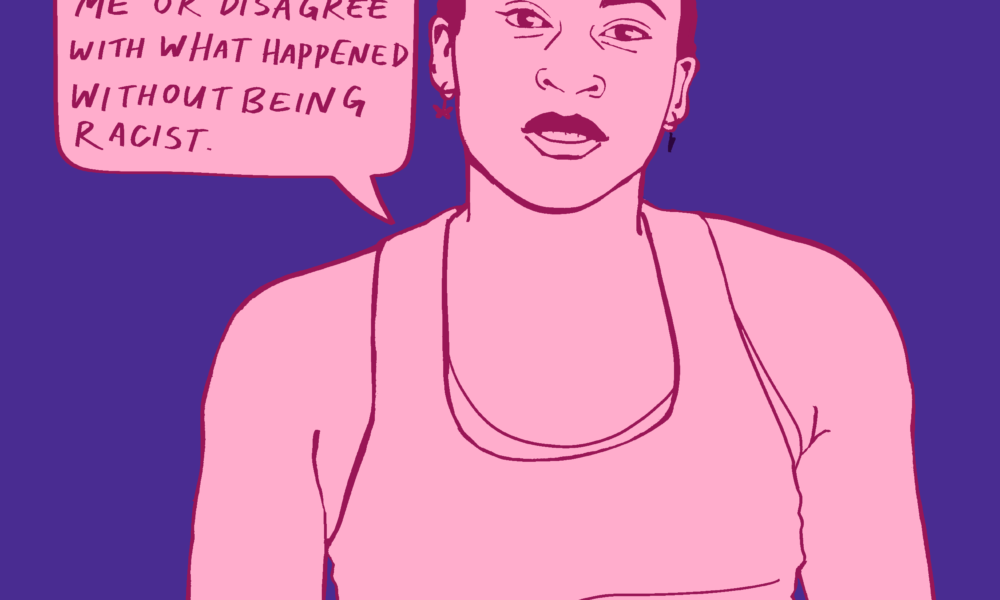




Two-time American Grand Slam champion Coco Gauff stopped playing mid-tennis rally against Chinese player Xinran Sun after seeing a flash from the scoreboards at the 2026 China Open. The chair umpire deemed the flash a hindrance under the Women’s Tennis Association (WTA) rulebook, allowing the competitors to replay the point. Gauff went on to win both the replayed point and the match.
Following the game, Gauff received a wave of racist social media comments and direct messages, prompting her to address the abuse on X and Instagram.
“hey everyone, you can dislike me or disagree about what happened without being racist. the amount of racist comments/dms I’ve received in the last few hours is insane. Lastly, I’m not a cheater or a thief,” Gauff wrote in response.
“It was an unfortunate situation but it is out of my control [….] I think it’s weird I’m getting hate for following the rules,” she further commented.
Two days later, Gauff lost her China Open match to Belgium’s Elise Mertens in straight sets and told her team that she had no energy during the game. She then withdrew from a subsequent tournament in Wuhan, where she would have played as the defending champion.
A week after the incident, the United Nations’ Human Rights Office posted a statement supporting Gauff on X.
“There is no place in sport for racial or sexist slurs and abuse. Players, coaches, and sports bodies need to stand up for those facing such attacks,” the organization wrote.
Similar racism occurred after American Serena Williams’s loss to Japan’s Naomi Osaka in the 2018 US Open final. During the match, Williams received three code violations from umpire Carlos Ramos: for receiving coaching, for breaking her racket, and for verbal abuse after calling Ramos a “thief,” resulting in fines totalling $17,000 USD.
The controversy continued when the Herald Sun, an Australian newspaper, published a cartoon by Mark Knight depicting Williams with exaggerated facial features, stomping on her racket. While Knight maintained that his work was intended to criticize Williams’s on-court behaviour, critics argued the cartoon reinforced racist and sexist stereotypes about Black women. The Australian Press Council ultimately ruled that the cartoon did not breach its media standards.
Both incidents illustrate how controversies surrounding Black women athletes’ on-court behaviour can extend beyond tennis itself, prompting racial attacks with consequences that go beyond the sporting community.
Social media has allowed athletes to build a stronger fan base and interact directly with supporters. Former world number eight Australian Daria Kasatkina has over 70,000 subscribers on her YouTube channel, where she shares behind-the-scenes WTA content, including interactions with other athletes and her team.
However, that same online accessibility also exposes players to more abuse—which follows them long after a match ends—than ever before. A July 2026 report by the WTA and World Tennis identified more than 12,000 abusive posts targeting their athletes across social media platforms, with 3,726 containing violent, sexual, racist, or targeted threats.
The report claimed the organizations have witnessed “significant progress” in reducing online hate against tennis players, coaches, and staff since adopting Signify Group’s Threat Matrix, a service combining artificial intelligence and human analysts to detect abuse.
“Nobody should have to go through that. It’s sad but I’m used to it,” Osaka said in a press conference, referring to the remarks Gauff has received since the China Open. “I know that some people are like, okay, if it bothers you that much, stay off social media. But sometimes that’s the best way to connect with your fans.”
Osaka’s statement reflects the predicament racialized tennis players often face in balancing the need to maintain a well-established supporter base with protecting their mental health.
Although the WTA’s adoption of monitoring technology shows an effort to address the problem, the continued presence of abusive comments against its athletes—particularly Black players—raises questions about the effectiveness of existing protections. When racist abuse goes unchallenged, sports, which many see as a channel for breaking norms, risk becoming spaces where existing racial stereotypes are reproduced rather than contested.